
Coupling Research in Europe
A critical lack of European focused telecoupling research – Synthesizing telecoupling research and operationalizing an integrated coupling framework rooted in metacoupling theory.
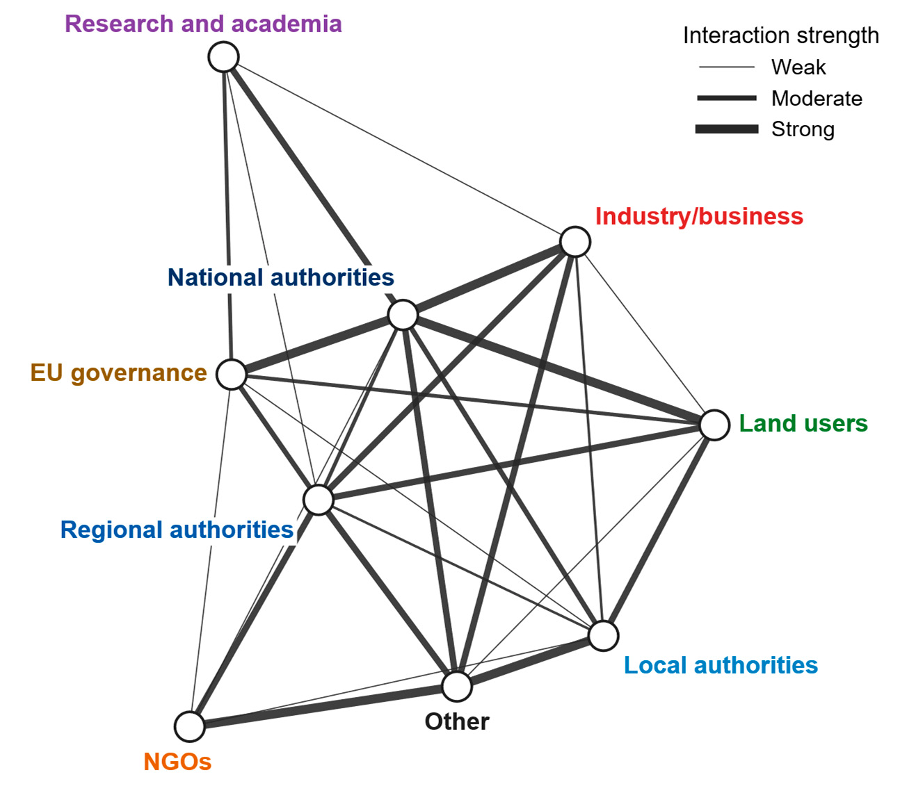
Land-use change, climate change, and biodiversity loss require integrated analytical frameworks to capture the multi-level interactions between humans and nature. The classical telecoupling framework primarily targets human–nature interactions across distant spatial levels. This may not fully capture the highly complex and specific regional, national, and pan-European multi-scale processes that dictate land-use decisions within the European Union context. A new paper by our partners Danka Moravcikova, Martina Hanová, Hana Zach, Filip Tkac, Franziska Wolf, Nikolaos Theodosiou and Mihaela Sima addresses this gap by first conducting a scoping review following PRISMA guidelines, synthesizing existing telecoupling research, and then operationalizing an integrated coupling model based on metacoupling theory. Preliminary results from the LTSER region of Trnava in Slovakia suggest that local land users have only limited influence on legislative decisions. The framework is intended to support future European comparisons and policy development by highlighting the importance of empowering local land managers and improving communication between researchers and farmers.
Case Study in Slovakia
The LTSER region of Trnava in Slovakia presents a highly relevant environment for examining land-use dynamics, as it reflects a typical post-communist landscape heavily transformed by intensive agriculture, rapid suburbanization, and fragmented land ownership. This makes the region an ideal laboratory for testing how strategic policies translate into local land management practices. Within this case study, quantitative methods are utilized to determine the magnitude and spatial extent of multi-scale flows, while qualitative methods help elucidate the cultural, institutional, and behavioral contexts driving stakeholder decisions. As the empirical analysis within this case study is currently ongoing, a comprehensive set of final results cannot be fully presented at this stage.
The preliminary findings of this study are:
- Imbalance in decision-making authority: Farmers, foresters, and landowners are heavily dependent on land use but have comparatively little influence on political and legislative decisions.
- Lack of networking: There are communication gaps between land users, the scientific community, regional administrations, and other stakeholders, which hinder knowledge transfer and collaboration.
- Dominance of higher-level decisions: Land use is heavily influenced by European and national regulations, while local stakeholders have only limited opportunities to help shape regional development strategies.