Šonedēļ Deliverable 5.3 Europe-LAND’s Integrated Coupling Framework was submitted, a major milestone advancing the project’s work on sustainable land-use strategies amid climate change and biodiversity challenges. This deliverable brings together conceptual, methodological, and empirical insights to support a deeper understanding of what drives land-use decisions across Europe.
Slovākijas Lauksaimniecības institūta Nitrā (Slovākija) starpdisciplināras komandas vadītajā pētījumā ir sniegta visaptveroša sistēma, tostarp detalizēti datu kopumi, kas balstīti uz Europe-LAND astoņu vietējo gadījumu izpēti.
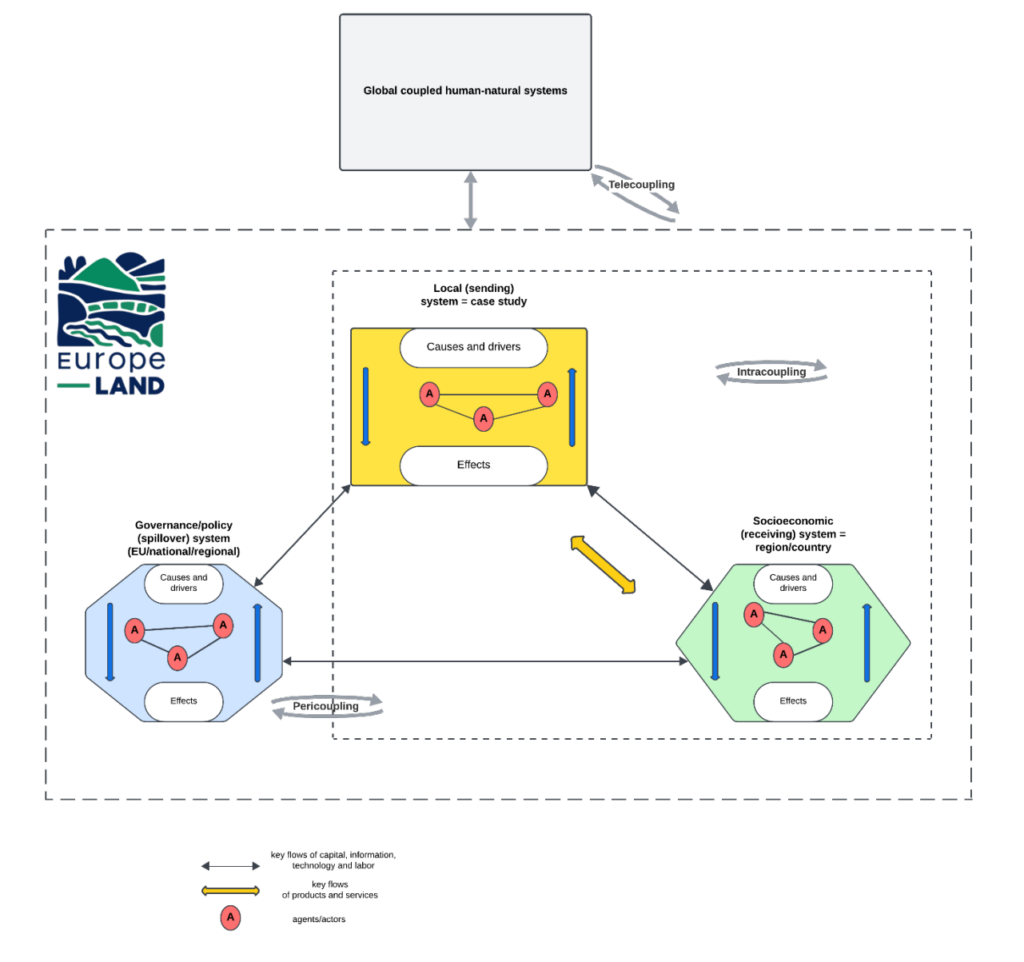
The central contribution of Rezultāts 5.3. is a novel integrated coupling framework positioned to integrate natural and social sciences in order to better explain how people, institutions, and ecological processes interact across distances. The framework responds to existing gaps in land-use research by combining quantitative indicators with qualitative perspectives. This combined approach strengthens the project’s ability to analyze how land-use change emerges from deeply interconnected systems.
The methodological foundations of the Europe-LAND framework emphasize the importance of interdisciplinarity and collaboration. The research draws on a wide range of approaches used in integrated coupling studies, from document analysis and interviews to ecological mapping, participatory methods, and social network analysis. These approaches help capture both direct land-use pressures and underlying drivers while strengthening the ability to identify how different actors influence land-use outcomes.
Europe-LAND sistēmā ir iekļautas arī atziņas par cilvēka un dabas sistēmu sasaisti un jauniem jēdzieniem, piemēram, metacoupling, uzsverot, ka, analizējot zemes izmantošanas trajektorijas, ir jāņem vērā vietējā, blakusesošā un attālinātā mijiedarbība. Šī paplašinātā perspektīva ļauj Europe-LAND labāk izprast reģionālās atšķirības, atgriezeniskās saiknes un dažādu zemes izmantošanu ietekmējošo sociāli vides faktoru savstarpējo saistību.
Turpmāk, Rezultāts 5.3. ir izklāstīti arī ieinteresēto personu un dalībnieku analīzes veikšanas soļi. Šie soļi palīdz noteikt galvenos zemes izmantošanas dalībniekus, novērtēt to ietekmes un atkarības līmeni un iezīmēt attiecības starp tiem. Šīs dinamikas izpratne ir būtiska, lai izstrādātu efektīvākas un iekļaujošākas zemes izmantošanas stratēģijas, kurās ņemtas vērā varas attiecības, institucionālā kārtība un ieguvumu un risku sadalījums.
In summary, the Europe-LAND integrated coupling framework is designed with flexibility in mind, as well as an understanding of how crucial it is to combine qualitative and quantitative data to understand the full spectrum of interactions shaping land-use change across the EU. As Europe-LAND moves forward, the framework will guide research on land-use transitions and support the development of more resilient, evidence-based policy approaches within the frame of the ongoing project and beyond.