Tento týden Deliverable 5.3 Europe-LAND’s Integrated Coupling Framework was submitted, a major milestone advancing the project’s work on sustainable land-use strategies amid climate change and biodiversity challenges. This deliverable brings together conceptual, methodological, and empirical insights to support a deeper understanding of what drives land-use decisions across Europe.
Výzkumná práce vedená interdisciplinárním týmem ze Slovenského zemědělského institutu v Nitře (Slovensko) představuje komplexní rámec včetně podrobných datových souborů, které vycházejí z osmi místních případových studií Europe-LAND.
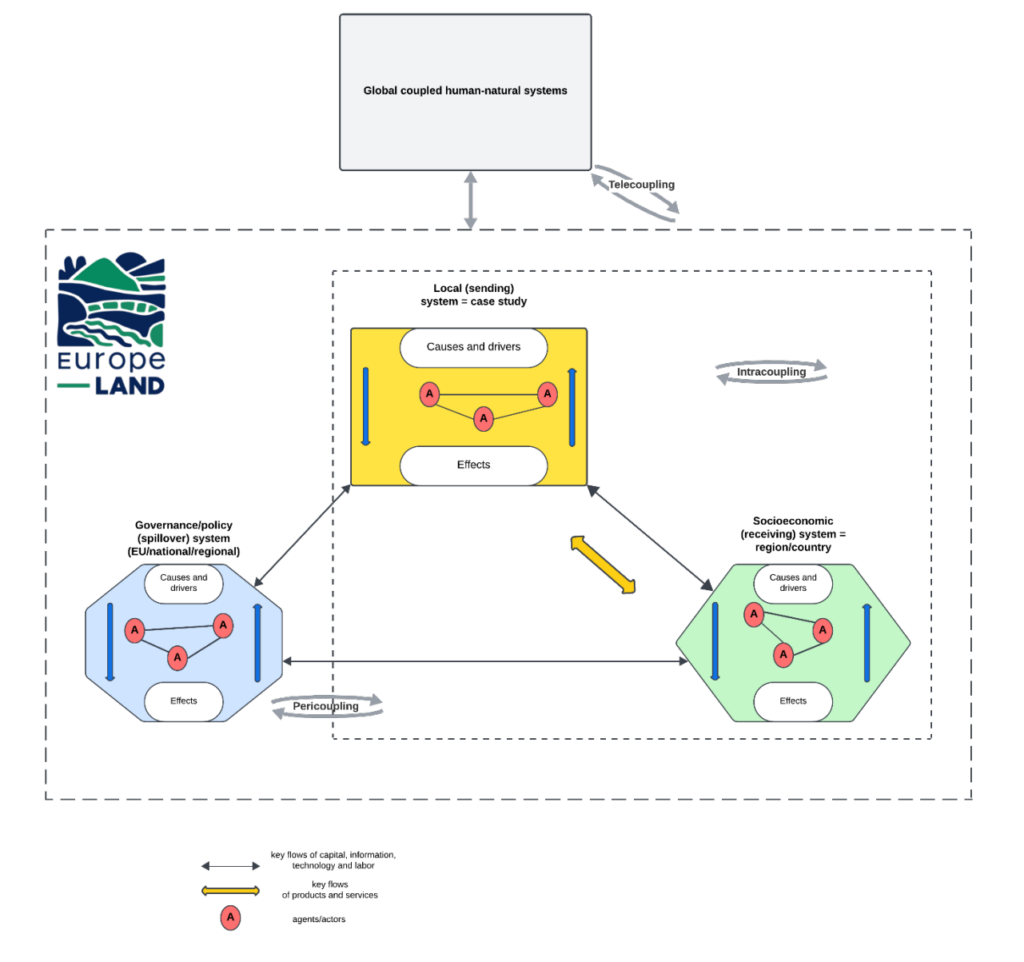
The central contribution of Dodávka 5.3 is a novel integrated coupling framework positioned to integrate natural and social sciences in order to better explain how people, institutions, and ecological processes interact across distances. The framework responds to existing gaps in land-use research by combining quantitative indicators with qualitative perspectives. This combined approach strengthens the project’s ability to analyze how land-use change emerges from deeply interconnected systems.
The methodological foundations of the Europe-LAND framework emphasize the importance of interdisciplinarity and collaboration. The research draws on a wide range of approaches used in integrated coupling studies, from document analysis and interviews to ecological mapping, participatory methods, and social network analysis. These approaches help capture both direct land-use pressures and underlying drivers while strengthening the ability to identify how different actors influence land-use outcomes.
Rámec Europe-LAND zahrnuje také poznatky o propojených lidských a přírodních systémech a nové koncepty, jako je metacoupling, a zdůrazňuje, že při analýze trajektorií využívání půdy je třeba brát v úvahu místní, sousední i vzdálené interakce. Tato rozšířená perspektiva umožňuje Europe-LAND lépe porozumět regionálním rozdílům, zpětným vazbám a vzájemné provázanosti různých socioenvironmentálních faktorů ovlivňujících využívání půdy.
Dále, Dodávka 5.3 také popisuje kroky pro provedení analýzy zúčastněných stran a aktérů. Tyto kroky pomáhají identifikovat klíčové aktéry územního plánování, posoudit míru jejich vlivu a závislosti a zmapovat vztahy mezi nimi. Pochopení této dynamiky je nezbytné pro vypracování účinnějších a inkluzivnějších strategií využívání půdy, které zohledňují mocenské vztahy, institucionální uspořádání a rozdělení přínosů a rizik.
In summary, the Europe-LAND integrated coupling framework is designed with flexibility in mind, as well as an understanding of how crucial it is to combine qualitative and quantitative data to understand the full spectrum of interactions shaping land-use change across the EU. As Europe-LAND moves forward, the framework will guide research on land-use transitions and support the development of more resilient, evidence-based policy approaches within the frame of the ongoing project and beyond.